Table of Contents
- Quick Fall Car Maintenance Checklist
- Check the Battery Before Cold Weather
- Check Fluids and the Cooling System
- Inspect Belts, Hoses, and Tight Spaces
- Check Tire Pressure, Tread, and Sidewalls
- Pay Attention to the Brakes and Wheel Area
- Check Wipers, Washer Fluid, and Exterior Lights
- Test the Heater and Defroster
- One More Fall Prep Step: Check Your Roadside Kit
- Get Ahead of Cold-Weather Problems
A fall car maintenance checklist is one of the easiest ways to give your car a careful once-over before colder weather arrives. Summer heat, long drives, and stop-and-go traffic can take a toll on batteries, tires, fluids, belts, and hoses. Then, as temperatures drop and daylight gets shorter, small problems can become much harder to ignore.
This fall car maintenance checklist covers seven practical checks to make before colder weather sets in. Most can be done in a driveway or garage, where a portable work light helps with shadowed areas under the hood and around the wheels. Have a qualified mechanic inspect anything damaged, leaking, or affecting braking, steering, or electrical performance.
Quick Fall Car Maintenance Checklist
Check | What to Look For | Where Lighting Helps |
Battery | Corrosion, connections, case condition | Underhood shadows |
Fluids & cooling system | Levels, leaks, residue | Reservoir markings |
Belts & hoses | Cracks, fraying, bulges | Tight engine-bay spaces |
Tires | Pressure, tread, sidewalls | Inner tread & wheel well |
Brakes | Noise, feel, visible wheel area | Lower wheel area |
Wipers & lights | Blade condition, exterior lights | / |
Heater & defroster | Heat, airflow, clearing | / |
Check the Battery Before Cold Weather
Cold weather is hard on a weak battery, so fall is a smart time to catch problems before the first really cold morning. The Car Care Council recommends checking the battery and charging system before winter, and AAA also includes the battery in its fall maintenance checklist.
With the engine off, look for corrosion around the terminals, loose or damaged connections, cracks or swelling in the case, and any recent signs of slow cranking. If the battery is several years old or starting has become less reliable, consider having it tested.
Battery terminals and nearby wiring can be difficult to see under the hood, even in a well-lit garage. For a longer underhood inspection, a hands-free work light can make the job easier. The HOKOLITE CLAKAP U2 Underhood Work Light is designed to span the hood and illuminate the engine bay, leaving both hands free while you inspect the battery, reservoirs, wiring, and nearby components. 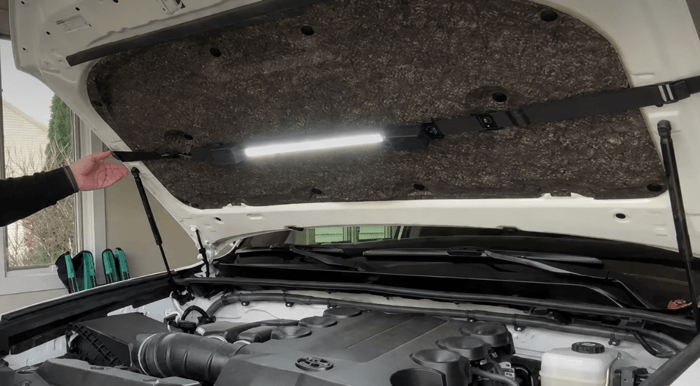
Check Fluids and the Cooling System
Next, while you already have the hood open, check the fluids your vehicle allows you to inspect at home. Your owner's manual should be your guide, since fluid locations and checking procedures vary by model.
Depending on the vehicle, that may include engine oil, coolant, brake fluid, transmission fluid, and windshield washer fluid. Check the levels, but also look around reservoirs, hoses, and nearby connections for fresh wet spots or residue. Good engine-bay lighting can make fluid-level markings easier to read and help small leaks or damp areas stand out against darker components.
Coolant deserves extra attention before winter because the cooling system has to protect the engine in both hot and cold conditions. Check the coolant level when the engine is cool, and look for discoloration, residue around the reservoir, or signs of leakage.
If a fluid is repeatedly low, looks unusual, or you find signs of a leak, topping it off may not solve the underlying problem.
Inspect Belts, Hoses, and Tight Spaces
Summer heat can be tough on rubber parts, so take a few minutes to look at belts and hoses before temperatures fall further.
Check belts for cracks, frayed edges, or obvious looseness. Look over hoses for cracks, bulges, wet spots, or residue near clamps and connections.
This is where a compact light can be more useful than broad engine-bay lighting. A large work light helps you see the whole area, but the back of a hose connection or a narrow gap between components can still be hard to see.
The HOKOLITE CLAKAP P3 Multi-Tool Pen Light fits that close-up role. Its compact inspection light is easy to position close to wiring, connectors, hoses, and other tight spaces when you are checking one specific area rather than the entire engine bay. 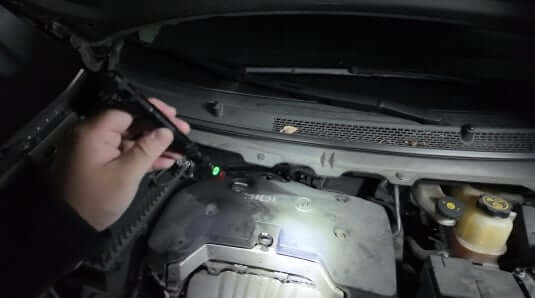
Check Tire Pressure, Tread, and Sidewalls
As temperatures change, tire pressure can change with them. At the same time, rain, wet leaves, frost, and eventually snow can make good tire condition even more important.
Check all four tires and the spare if your vehicle has one. Use the recommended PSI listed on the driver-side door-jamb label or in the owner's manual, not the maximum pressure printed on the tire.
Then look for:
- Uneven or excessive tread wear
- Cracks or cuts in the sidewall
- Bulges or other visible damage
- Nails, screws, or other embedded objects
- A tire that repeatedly loses pressure
Both AAA and the Car Care Council include tire pressure and tread checks in their fall maintenance recommendations.
Don't stop at the part of the tread that's easiest to see. Take a moment to check the inner tread and wheel area as far as you can safely see, since wear on the inside edge is easier to miss.
Lighting matters during the visual inspection, too. The outer tread may be easy to see in daylight, while the inner tread and wheel-well area often sit in shadow. Bringing a portable light closer to the tire can make uneven wear, sidewall damage, and lodged debris easier to spot.
Pay Attention to the Brakes and Wheel Area
You do not need to take the brakes apart to include them in a fall inspection. Start with what you can hear, feel, and see.
Listen for squealing or grinding. Pay attention to vibration, pulling to one side, changes in pedal feel, or longer stopping distances. The Car Care Council lists brake inspection as an important part of preparing a vehicle for winter conditions.
Good lighting also helps when you are checking around the wheels. Wheel wells and lower vehicle areas naturally sit in shadow, and overhead garage lights often do not reach them well.
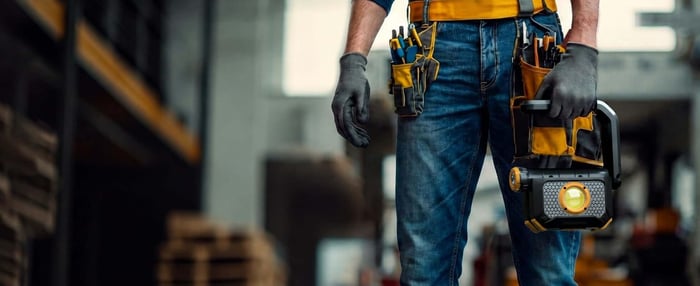
A portable work light such as the HOKOLITE ADELANTE W3 can be positioned closer to the area you are checking. Its clamp, magnetic mounting, stand, and adjustable direction make it practical for aiming light into a wheel well or across a lower work area without holding the light in your hand.
Task lighting complements overhead garage lighting by bringing light closer to wheel wells and other shadowed repair areas.
If anything about the brakes feels different from normal, have the system professionally inspected.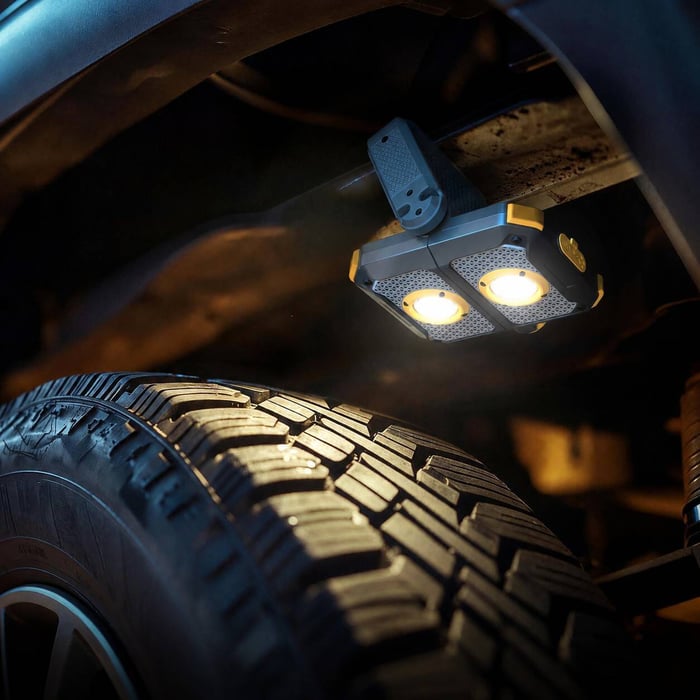
Check Wipers, Washer Fluid, and Exterior Lights
Fall usually means shorter days and, in many areas, more rain. That makes visibility an important part of seasonal maintenance.
Inspect the wiper blades for cracked or peeling rubber, streaking, chattering, or missed areas on the windshield. Test the washer system and make sure the reservoir is filled with fluid suitable for your local temperatures.
Then walk around the vehicle and check:
- Headlights and high beams
- Taillights
- Brake lights
- Turn signals
- Hazard lights
The Car Care Council includes wipers, washer fluid, and exterior lights in its fall checklist, while AAA also recommends checking visibility equipment before winter.
This part of the checklist does not need special equipment. It only takes a few minutes and can help prevent visibility problems on dark or rainy drives.
Test the Heater and Defroster
Do not wait for the first freezing morning to find out that the heater or defroster is not working properly.
Turn the system on and check the heat output, different fan speeds, airflow from the vents, the front windshield defroster, and the rear-window defroster.
A working defroster is about more than comfort. It helps maintain visibility when cold weather, moisture, and frost affect the glass. Both the Car Care Council and AAA recommend checking heating and defrosting systems as part of fall vehicle preparation.
If the heater is not producing warm air, airflow is weak, or the windshield is not clearing properly, have the system inspected before colder weather settles in.
One More Fall Prep Step: Check Your Roadside Kit
After the vehicle inspection, take a minute to look through your roadside supplies.
Make sure essentials such as jumper cables or a jump starter, a tire pressure gauge, first-aid supplies, a blanket, phone charging gear, and a reliable flashlight are ready to go. In colder areas, an ice scraper and snow brush belong in the car as well.
The Car Care Council also recommends keeping jumper cables, a flashlight, blankets, water, food, and first-aid supplies in a cold-weather emergency kit.
Get Ahead of Cold-Weather Problems
A fall car maintenance checklist does not need to turn into a major repair project. The goal is to catch obvious problems while the weather is still comfortable enough to deal with them.
Check the battery, fluids, belts and hoses, tires, brakes, visibility equipment, and climate controls. Follow your owner's manual for vehicle-specific maintenance, and leave anything beyond your experience to a qualified technician.
And if you are doing these checks yourself, good lighting can make the work easier. An underhood light, a portable work light, and a compact inspection light each solve a different visibility problem. Explore HOKOLITE work lights for garage repairs and vehicle inspections. Learn More Lights