Table of Contents
- What Should You Look for in a Hunting Flashlight?
- White, Red, or Green: Which Light Color Is Best for Hunting?
- Lumens vs. Beam Distance: What Matters More for Hunting?
- Battery, Controls, and Durability Matter in the Field
- One Color, Filters, or a Multi-Color Flashlight?
- Why the HOKOLITE T1 Fits Early-Season Hunting?
- Check the Rules Before Using a Hunting Light
- Final Thoughts
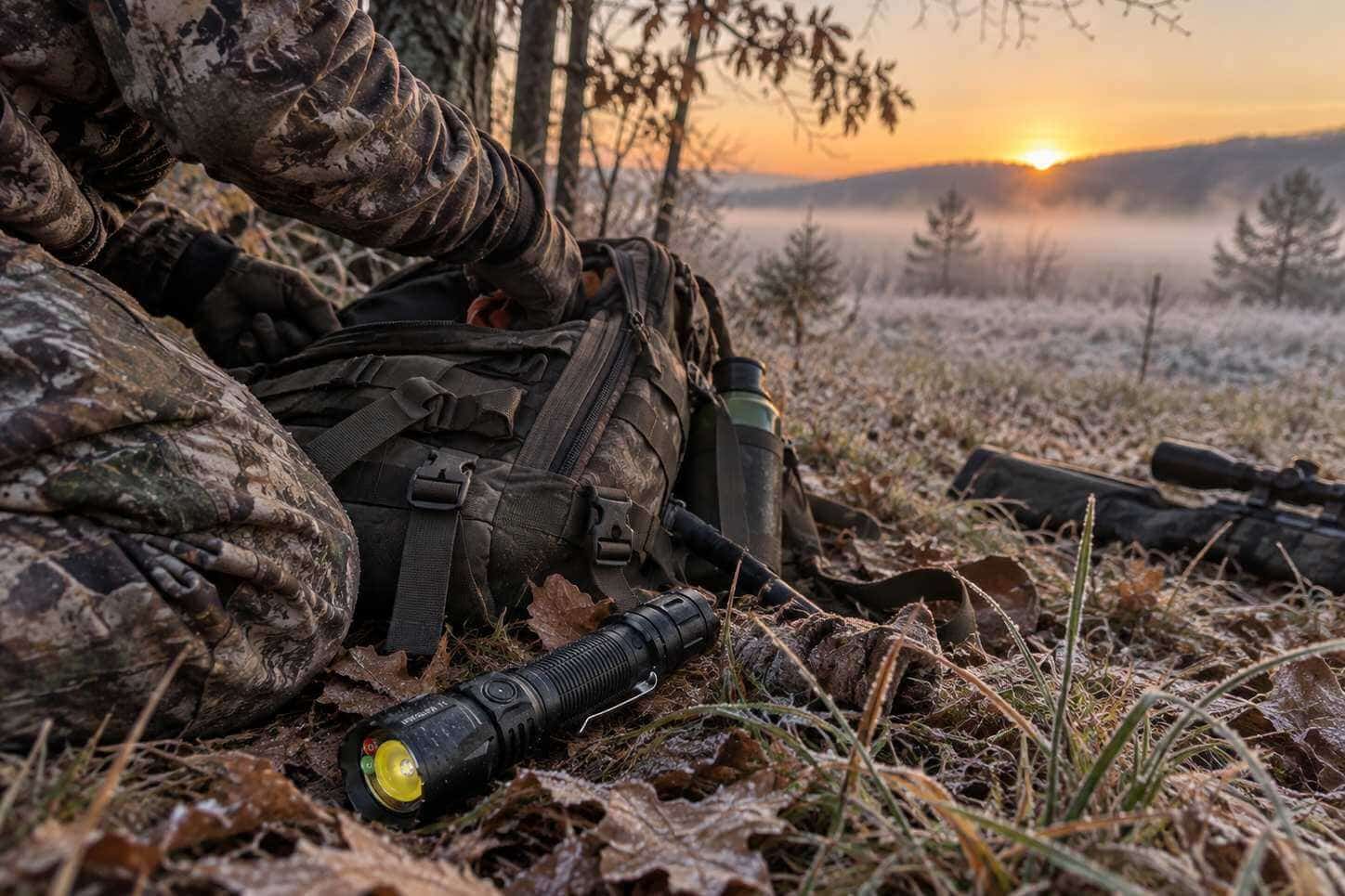
Early-season hunts can start well before sunrise and run past sunset. On the walk in, you may only need enough light to watch your footing. Later, you might be checking gear in thick cover or looking farther down an open trail.
Those situations call for very different kinds of light.
So when choosing a hunting flashlight, don't stop at the lumen number on the box. Beam shape, distance, light color, battery life, controls, and weather resistance can matter just as much once you're actually in the field.
What Should You Look for in a Hunting Flashlight?
Start with the way you hunt.
If most of your time is spent in dense woods, a usable beam at close and medium range may matter more than extreme throw. If you're crossing fields or working along open edges, extra beam distance becomes much more useful.
A good hunting flashlight should also give you some control over brightness. Full power is great when you need it, but it is often far too much for checking a pack, reading something nearby, or moving along a trail before daylight.
Other basics are easy to overlook until they become a problem: simple controls, enough runtime to get you back after dark, and a body that can handle rain, mud, and the occasional drop.
White, Red, or Green: Which Light Color Is Best for Hunting?
There isn't one color that works best for every animal or every situation.
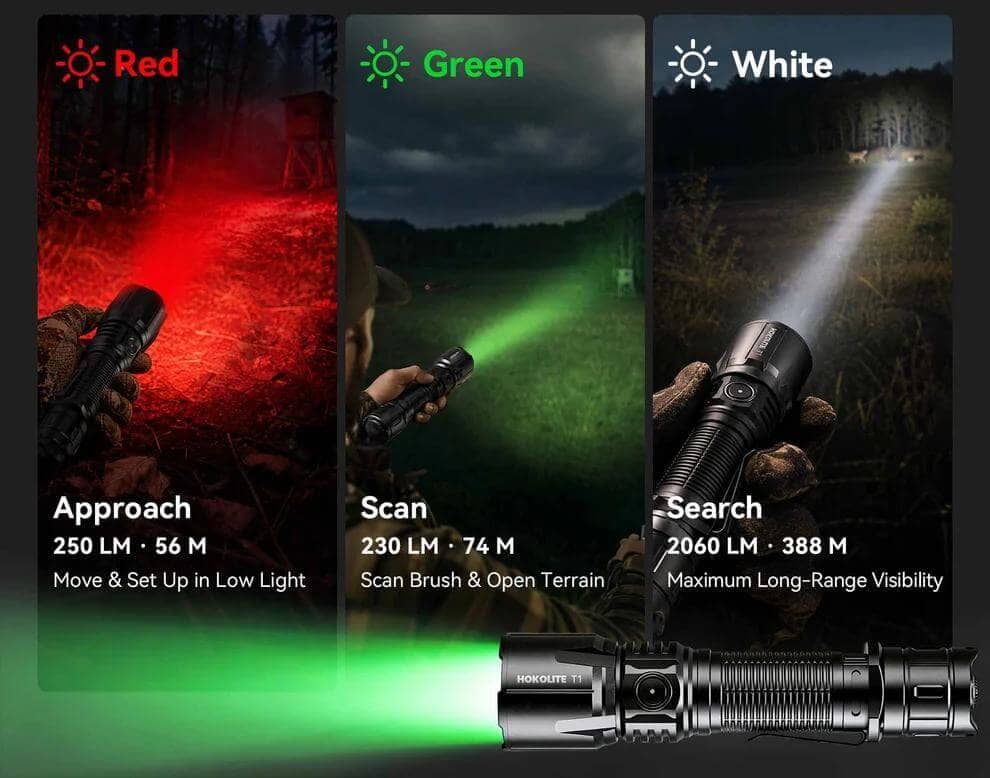
Light Color | Commonly Used For | Best Use |
Red | Whitetail deer | Pre-dawn walk-ins and close-range tasks |
Green | Wild hogs | Field scanning and spotting movement |
White | Any game | Positive identification and terrain checks |
Red Light for Deer Hunting
Red light is a common choice around whitetail deer. Deer do not respond to longer red wavelengths the same way humans do. The Pennsylvania Game Commission notes that whitetails are less sensitive to orange and red light, although they can still detect flashlight illumination regardless of color.
That last part is worth remembering. Red light isn't invisible to deer.
What it does give you is a less aggressive lighting option when a bright white beam would be unnecessary. It can be handy when walking toward a stand before sunrise, checking gear, or handling something close by.
Green Light for Hog Hunting
Green light is often used when hunting hogs, particularly when scanning fields, brush lines, and other open ground.
Part of the advantage is actually on the hunter's side. Human eyes pick up green very well, so movement and shapes can stand out clearly at a distance.
Research on pig vision shows that pigs have dichromatic vision, meaning their color perception differs from ours. The Texas Parks & Wildlife Department also describes feral hogs as having relatively poor eyesight compared with their strong hearing and sense of smell.
That doesn't mean hogs can't see green light. It simply makes green a useful option when the job is scanning rather than producing the most natural-looking view.
White Light When You Need to See Everything
White light is still the best choice when detail matters.
It shows terrain, branches, equipment, and colors more naturally than red or green light. If you need to confirm what you're looking at or safely work your way through unfamiliar ground, white is usually the easiest light to use.
The trade-off is that a strong white beam is easier to notice, so it makes more sense when seeing clearly matters more than keeping your lighting subtle.
In practice, many hunters can make use of all three colors rather than relying on only one.
Lumens vs. Beam Distance: What Matters More for Hunting?
A flashlight can have an impressive lumen rating and still be a poor fit for your terrain.
Lumens tell you how much light the flashlight produces. They don't tell you where that light goes.
A wider, flood-style beam is useful in thick woods because it lights up more of the area around you—branches, uneven ground, brush, and obstacles close to the trail.
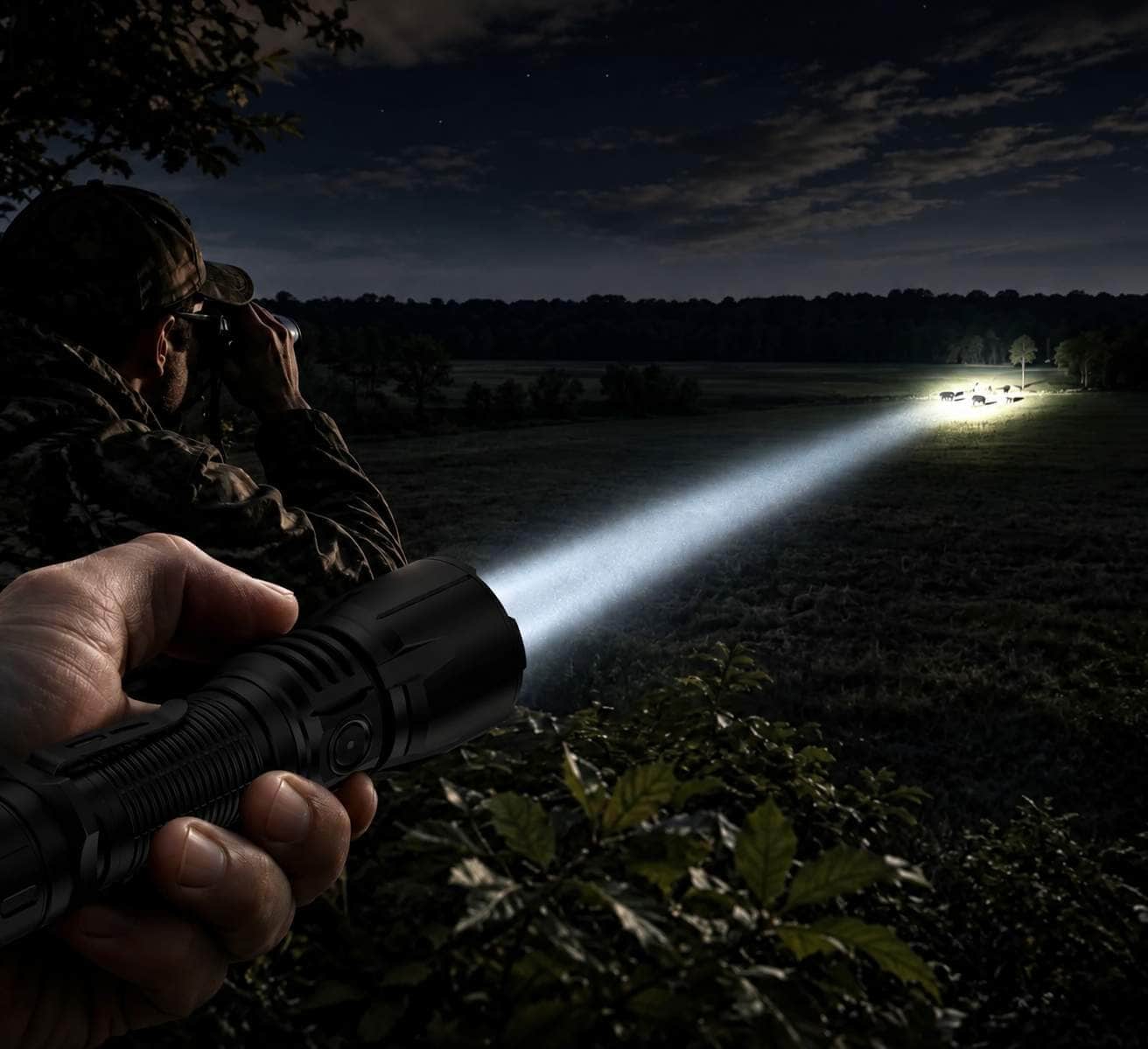
A tighter throw beam does something different. It concentrates more light forward, which becomes helpful across open fields or when you want to see farther down a trail.
Most hunters don't need maximum distance every minute they're outside. A flashlight that gives you good reach along with practical lower-output settings will usually be easier to live with than one built around maximum brightness alone.
Battery, Controls, and Durability Matter in the Field
A hunting flashlight may sit unused for hours and then suddenly become important again after sunset.
That makes battery life more than a spec-sheet number. You want enough capacity left for the walk out, especially if you've already used the light early in the morning.
Multiple brightness settings help here. There is little reason to burn through your battery at full output while checking gear two feet away.
Controls matter for the same reason. If you're wearing gloves or working in the dark, switching modes shouldn't feel like solving a puzzle.
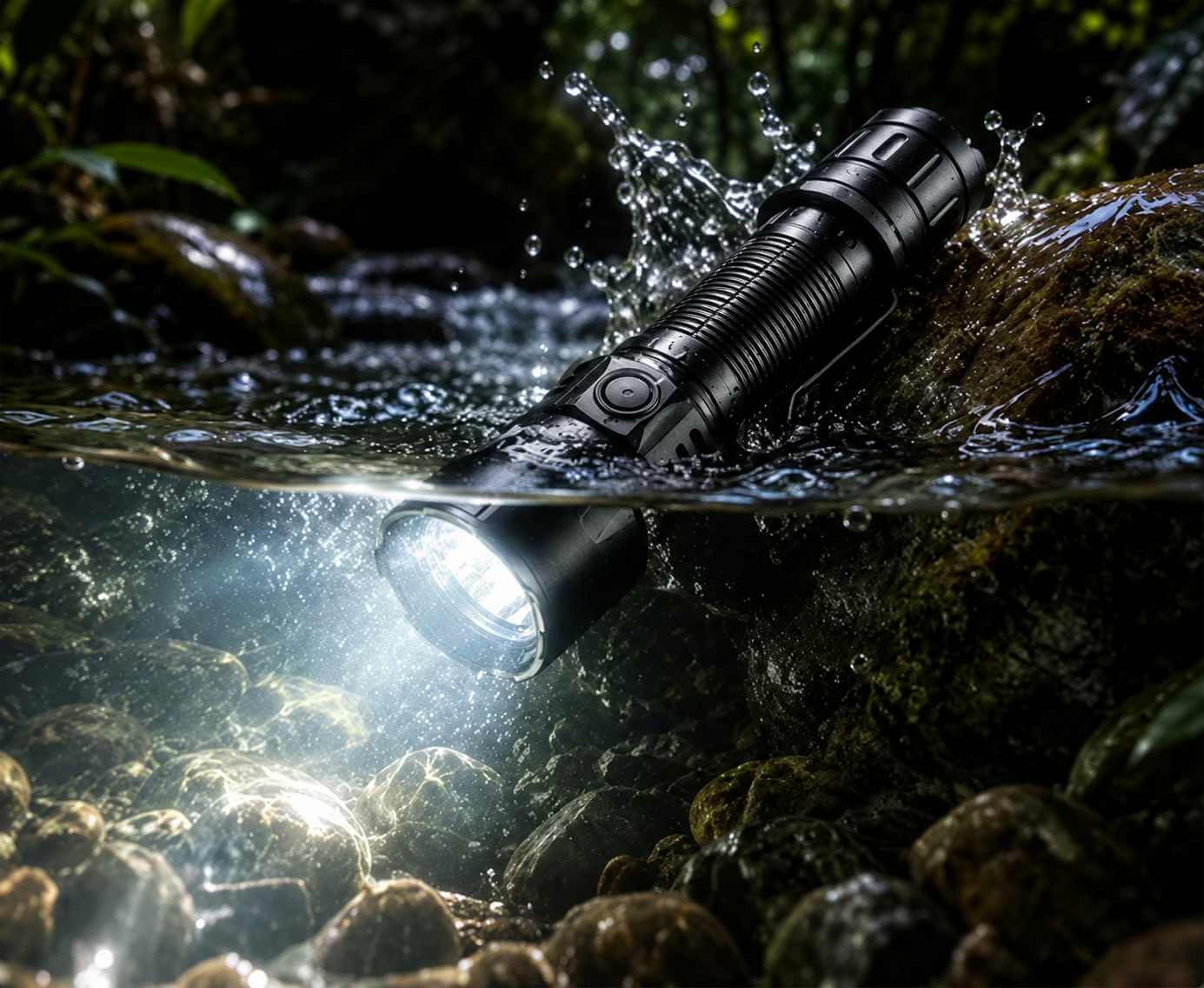
And then there's the weather. Early season can mean wet grass, dew, sudden rain, mud, and gear getting tossed around. A useful hunting light should be built for that environment rather than just looking rugged.
One Color, Filters, or a Multi-Color Flashlight?
If you want red or green light, you generally have two options: use colored filters over a white flashlight, or choose a flashlight with separate LEDs.
Filters work, but they give you extra pieces to carry and swap in the dark.
Dedicated LEDs are simpler. White, red, and green light stay in the same flashlight, so changing colors doesn't mean digging through your pack for an accessory.
That's one reason the HOKOLITE T1 hunting flashlight works well for this kind of setup. Instead of relying on removable filters, it has dedicated white, red, and green LEDs built into the light.
Why the HOKOLITE T1 Fits Early-Season Hunting?
The T1's white light reaches up to 2,060 lumens with a maximum beam distance of 388 meters. Red and green LEDs are built in as separate light sources, so you can switch colors without adding filters.
It also uses a removable 5,000mAh 21700 rechargeable battery, supports USB-C charging, has an IPX8 water-resistance rating, and is rated for drops up to 1.5 meters. On Low, the T1 can run for up to 243 hours, giving you the option to conserve battery when maximum output isn't needed.
What makes that combination useful isn't any one number. It's having several lighting options in one flashlight.
On an early-season hunt, the same light can cover a dark walk-in, gear checks, field scanning, longer-range visibility, and the trip back after sunset.
T1 - Three Color No Filters to Change 2060LM Long Throw High-Performance Rechargeable Hunting Flashlight for Outdoor & Hunting
$99.99
$199.99
Three Colors. One Hunting Flashlight. No Filters to Change. Match Your Light to the Hunt—No Filters to Change: Switch between dedicated white, red and green LEDs with the side switch. From walking to your hunting spot to checking gear and… Read More

Check the Rules Before Using a Hunting Light
Artificial-light regulations vary widely depending on the state, species, season, and hunting method.
Before using any flashlight around game, check the current rules from the wildlife agency where you'll be hunting. The U.S. Fish & Wildlife Service also provides a state-by-state directory that can help you find the right agency.
Final Thoughts
The best hunting flashlight isn't automatically the one with the highest output.
Think about the ground you'll be covering, the game you're hunting, how far you realistically need to see, and when you'll use white, red, or green light.
For an early-season hunt, having a light that can change with the situation is usually more useful than chasing one extreme specification. That's the appeal of a three-color flashlight such as the HOKOLITE T1: fewer loose accessories and one light that can take on several jobs from before sunrise to the walk back out.