Table of Contents
- Start with the tent
- Around the campsite, placement matters more than you think
- A headlamp handles most of the jobs where a lantern doesn't
- Keep a flashlight for the times you need to look farther away
- How many lumens do you need for camping?
- A few things worth doing before it gets dark
- You don't need a complicated lighting setup
- Lighting should make camp easier, not brighter
One thing changes quickly once fall arrives: you lose daylight earlier than you expect. This camping lighting guide covers a simple way to light your tent, campsite, and the path around camp without bringing more gear than you need.
You can start setting up camp in the afternoon and still end up cooking dinner in the dark. Later, someone may need to find a jacket in the tent, walk to the restroom, or check something near the edge of the campsite.
For most camping trips, you don't need one extremely powerful light. You need a few lights that handle different jobs well. A lantern makes sense around the tent and picnic table. A headlamp is easier when your hands are busy. A flashlight is useful when you want to see farther ahead.
That simple setup covers most of what happens after sunset.
Start with the tent
The inside of a tent is a small space, so high brightness can become uncomfortable pretty quickly.
For changing clothes, finding gear, or getting ready for bed, soft area light is usually more useful than a strong flashlight beam. Put a bright flashlight on the floor and you'll often end up with one harsh spot and plenty of shadows.
A camping lantern is usually more practical.
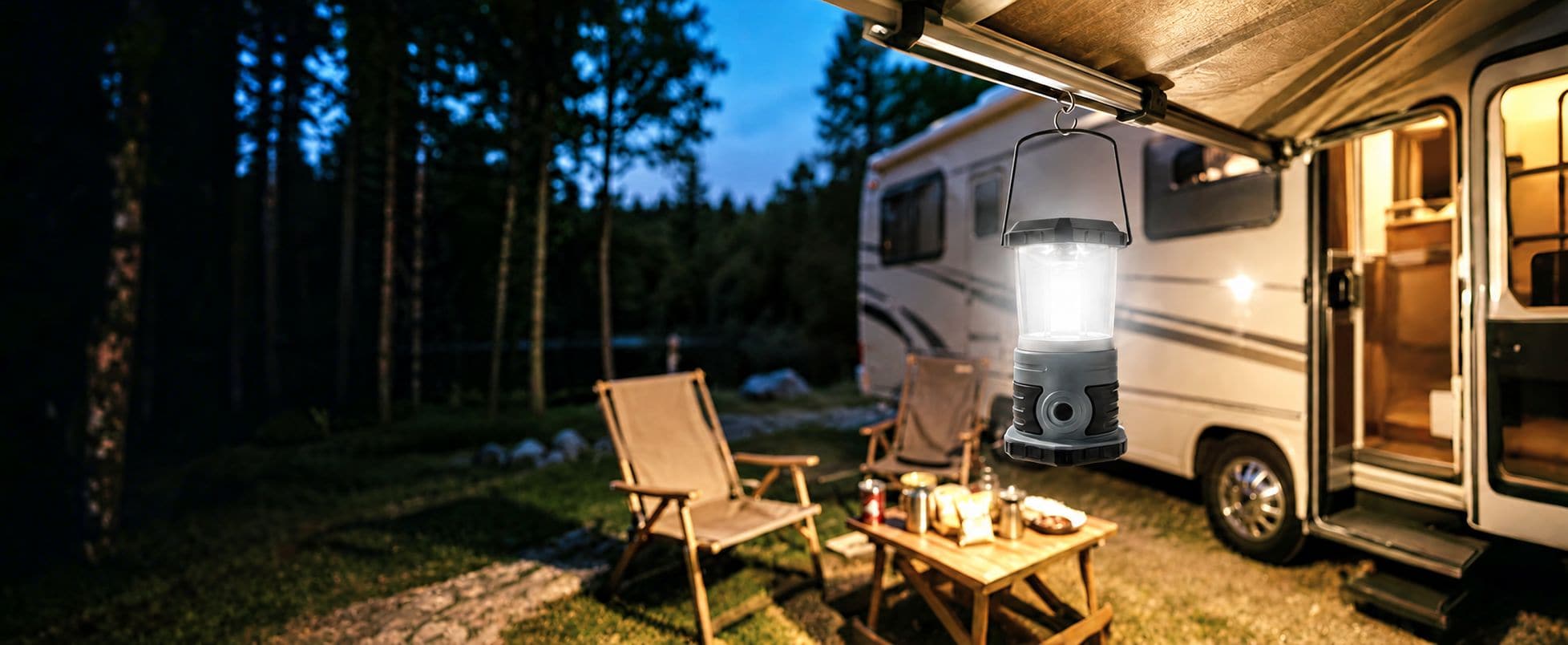
If your tent has a safe hanging point, placing the lantern overhead helps spread the light across the space. Otherwise, set it somewhere near the middle of the tent where sleeping bags and backpacks won't block it.
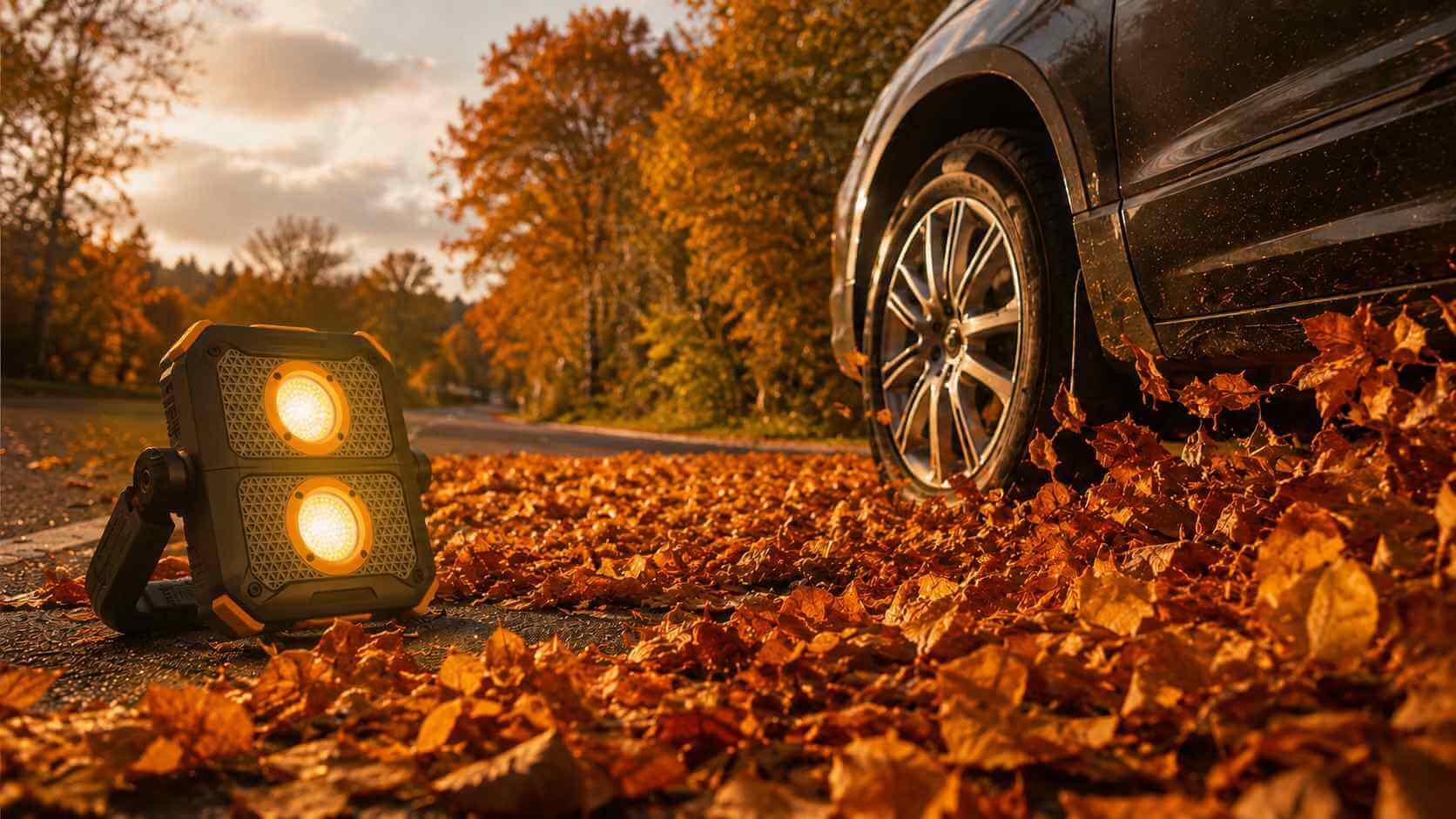
The HOKOLITE INNOFOX C7 (Model 5503) Camping Lantern can be used this way. It has 360-degree illumination, adjustable brightness, and output up to 1,500 lumens. The built-in handle and hanging hook also give you a couple of placement options.
Inside the tent, though, there is rarely a reason to run it at full power.
Turn it down until you can comfortably see what you're doing. You'll get less glare, and the batteries will last longer too.
Around the campsite, placement matters more than you think
Throughout this camping lighting guide, placement matters just as much as brightness. The temptation with campsite lighting is to put one lantern in the middle of everything and turn it up. That works, but not always very well.
If the lantern is too bright, people sitting close to it get glare while the outer edges of the campsite still look dark. Moving the light often helps more than adding brightness.
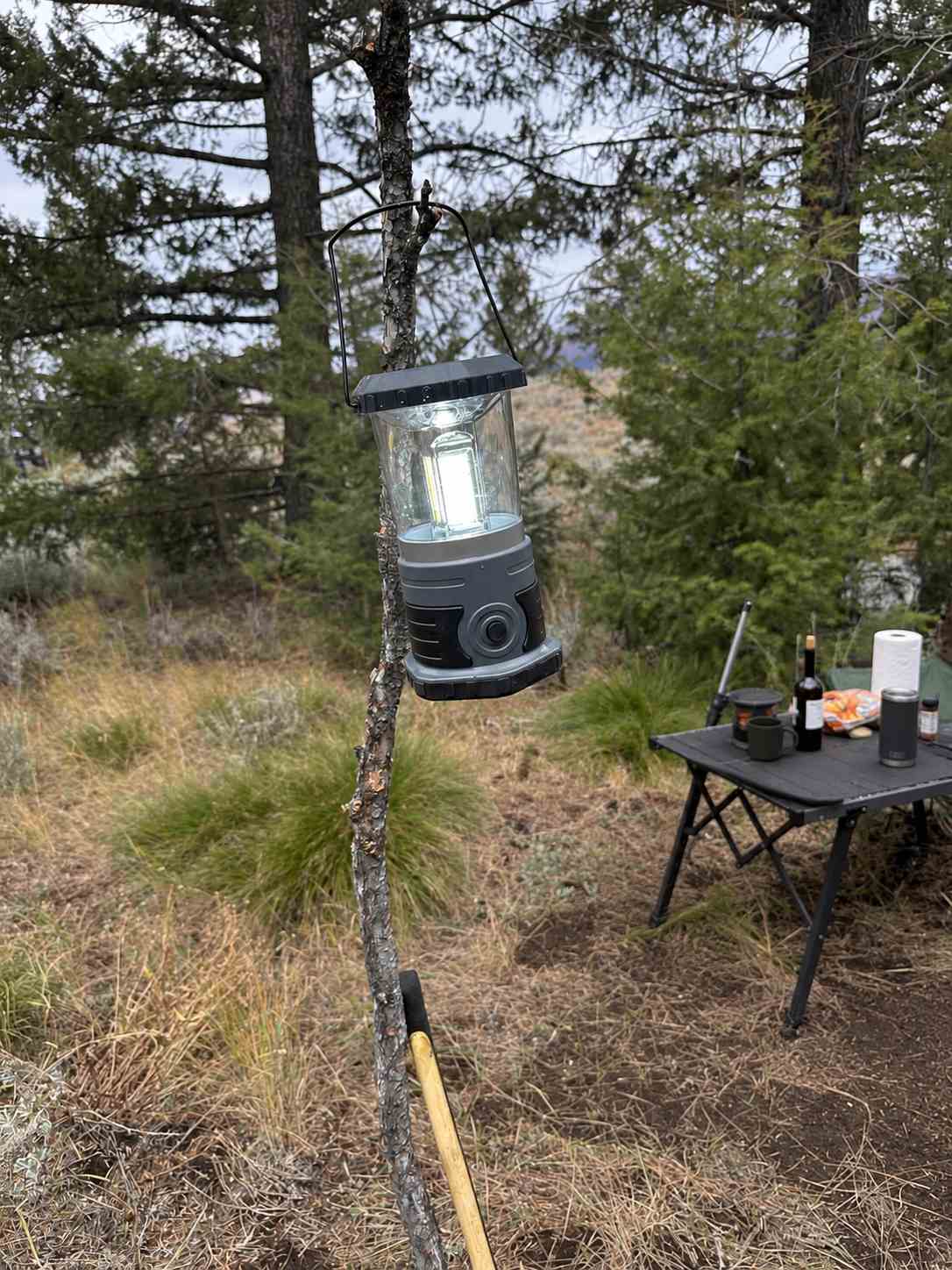
The picnic table is usually the best place to start. That's where people eat, talk, prepare food, play cards, or sort through gear. A lantern with broad output can cover that area without needing to point in one direction.
The INNOFOX C7 runs on four D batteries and has an approximate runtime of 1.5 to 75 hours depending on the setting. Its housing is rated IPX4 for water resistance.
For an ordinary evening at camp, medium output will often do the job.
If the tent entrance or cooking area sits outside that pool of light, don't try to make the lantern cover everything. This is where a second, personal light becomes much more useful.
It's also worth getting your campsite organized before sunset. The National Park Service recommends setting up camp while you still have daylight, which makes sense for more than just pitching the tent. You'll know where the paths are, where you've left your gear, and where your lights are when you eventually need them.
A headlamp handles most of the jobs where a lantern doesn't
Think about the things you actually do at camp after dark.
Cooking. Washing dishes. Adjusting a tent stake. Opening storage bins. Carrying something from the car. None of those are especially convenient with a flashlight in one hand.
A headlamp solves that problem by keeping both hands free.
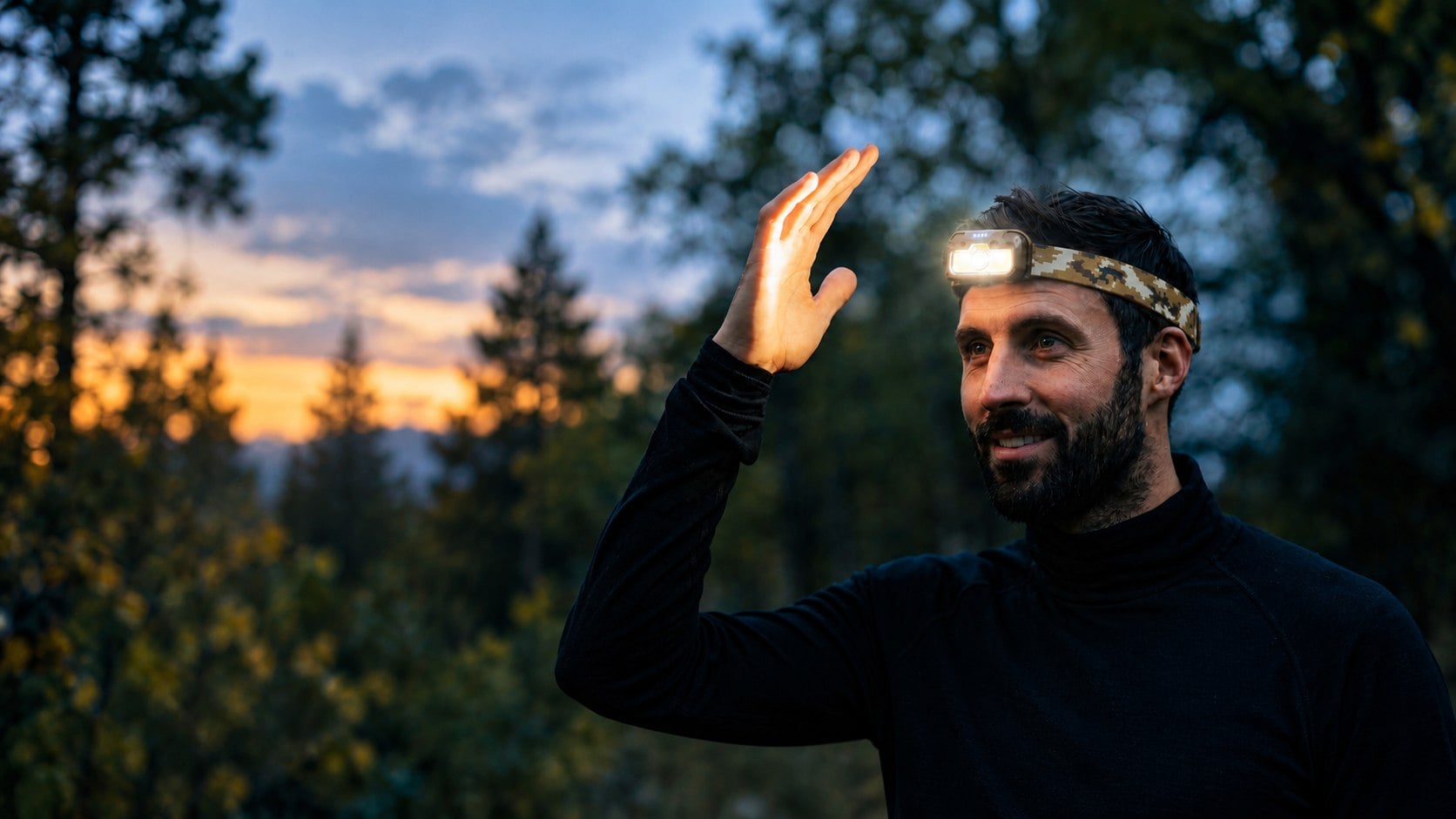
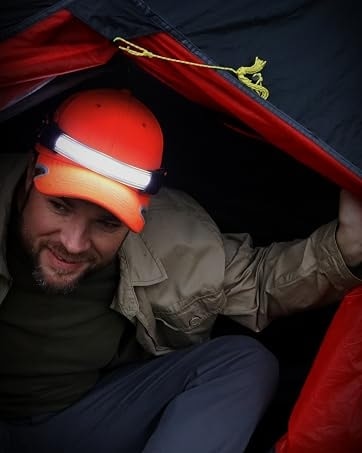
The HOKOLITE 6680 Headlamp has a 230-degree wide beam and output up to 1,000 lumens. The wide beam is the part that matters most around camp. Instead of lighting one small circle directly in front of you, it gives you a broader view of your work area.
It also has several lighting modes, a rear red light, USB-C charging, and an approximate runtime of 4 to 10 hours.
Again, the maximum setting isn't the point.
When you're making dinner or looking through a backpack, the object you need to see is probably only a few feet away. Lower or medium output is usually easier on the eyes, especially when other people are standing nearby.
A headlamp is also useful for short walks around the campground. You don't have to think about where to aim it. Look toward the path, and the light follows.
Keep a flashlight for the times you need to look farther away
There is some overlap between a headlamp and a flashlight, but they don't feel the same in use.
A headlamp works naturally while you're moving. A handheld flashlight gives you more control over where the beam goes.
That matters when you want to check farther down a trail, look behind the tent, find a sign, or see what made a noise outside the main campsite.
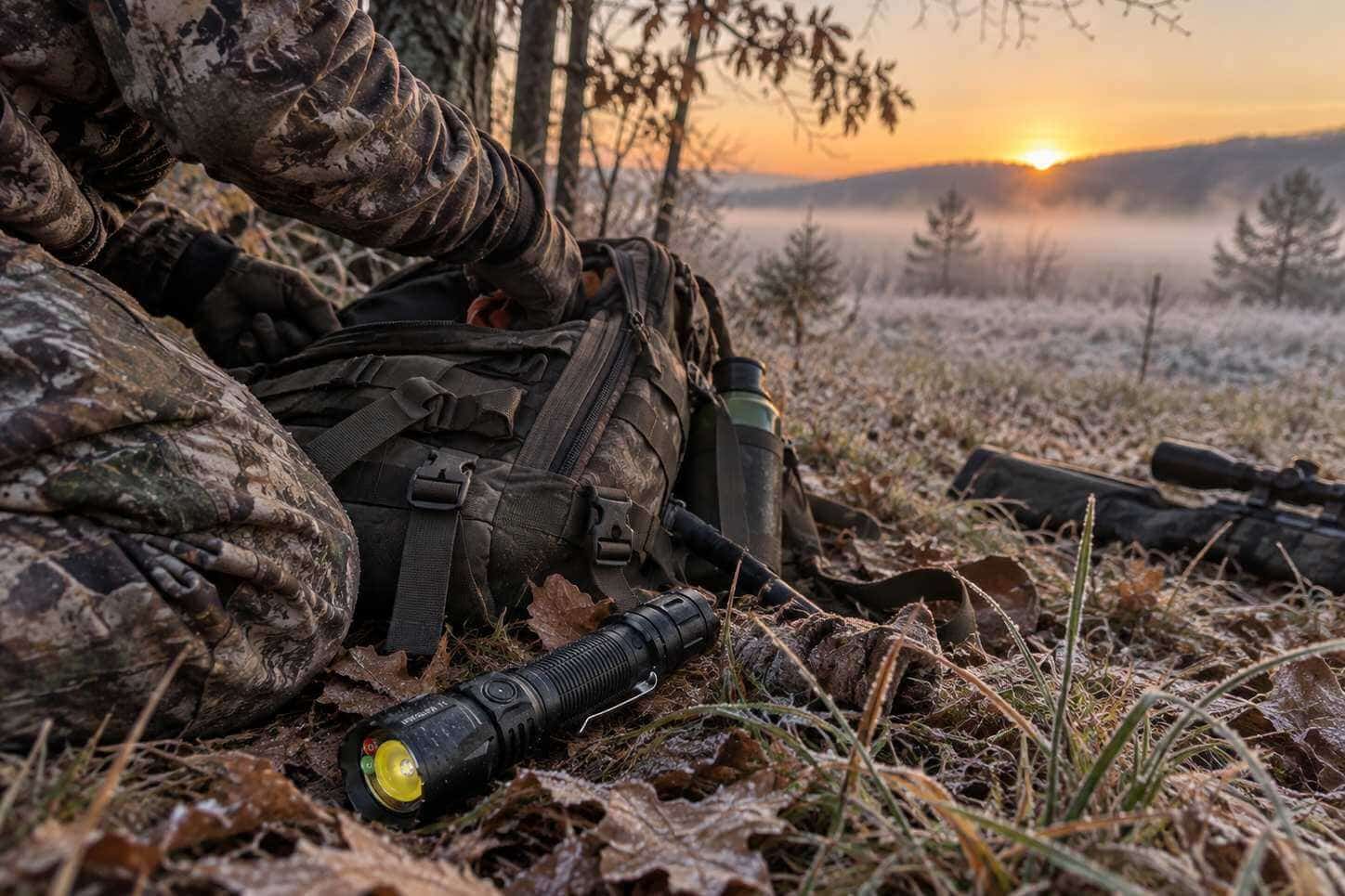
The LEXALL E6 EDC Flashlight is designed with both a spotlight and a floodlight. Its maximum output is 2,000 lumens. The spotlight is rated to 200 meters, while the floodlight reaches up to 65 meters.
You may not need that distance every night, but having the choice is useful.
The E6 also has USB-C charging, stepless dimming, a magnetic base, and IPX6 water resistance.
One thing that helps at night is resisting the urge to immediately use the highest setting. If you've been sitting around a moderately lit campsite, blasting a very bright beam onto the ground in front of you can make everything outside that beam seem even darker.
Start lower. Turn it up when you actually need to see farther.
How many lumens do you need for camping?
Probably fewer than you think for some jobs, and more for others.
There isn't one lumen number that works for every situation, which is why this camping lighting guide focuses on the task first and brightness second.
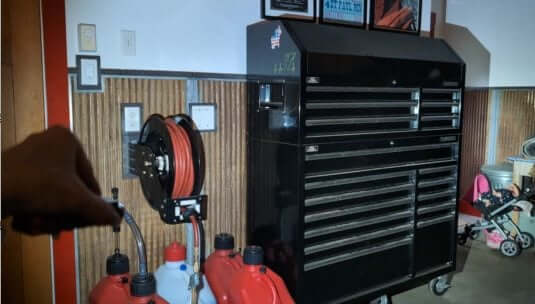
Inside a tent, comfort matters more than distance. Around the picnic table, you want enough light to see food, gear, and the people around you. Once you're looking down a trail or across a larger open area, higher output becomes more useful.
Beam shape matters too.
A broad flood beam can be much nicer for cooking or working close to camp, while a focused beam helps when you're trying to see something farther away. REI makes the same distinction in its guidance on choosing headlamps.
So don't judge a camping light only by the largest number printed on the box.
Look at how the light is distributed, whether you can adjust it, how long it runs, and where you plan to use it.
A few things worth doing before it gets dark
- Put your lights somewhere you can find them. It sounds obvious until you're standing in a dark tent feeling around for the headlamp that somehow ended up under a sleeping bag.
- Check batteries before leaving home. Charge rechargeable lights. If several people are camping together, make sure more than one person has access to a light.
- And keep one flashlight close to where you sleep. If you need to leave the tent during the night, you shouldn't have to search for it first.
Fall trips make these small habits more noticeable because there are simply more hours of darkness to deal with.
You don't need a complicated lighting setup
For most car camping, the setup in this camping lighting guide comes down to three basic lights.
Use the INNOFOX C7 as the main lantern for the tent and shared campsite.
Use the HOKOLITE 6680 Headlamp when you're cooking, setting up gear, walking around camp, or doing anything that needs both hands.
Keep the LEXALL E6 EDC Flashlight for checking farther down a path, scanning beyond the campsite, or as a backup when you want a handheld beam.
They overlap a little, and that's fine. The point isn't to assign a rigid job to every light. It's to avoid depending on one light for everything.
Explore more camping and outdoor lighting options
Lighting should make camp easier, not brighter
Good campsite lighting isn't about lighting up every tree around you.
Most of the time, you only need to see the space you're using, the task in front of you, or the path you're about to walk.
Set up a lantern where people gather. Put on a headlamp when you need your hands. Reach for the flashlight when you need to see beyond the immediate campsite. That's usually enough for a long fall night.