Table of Contents
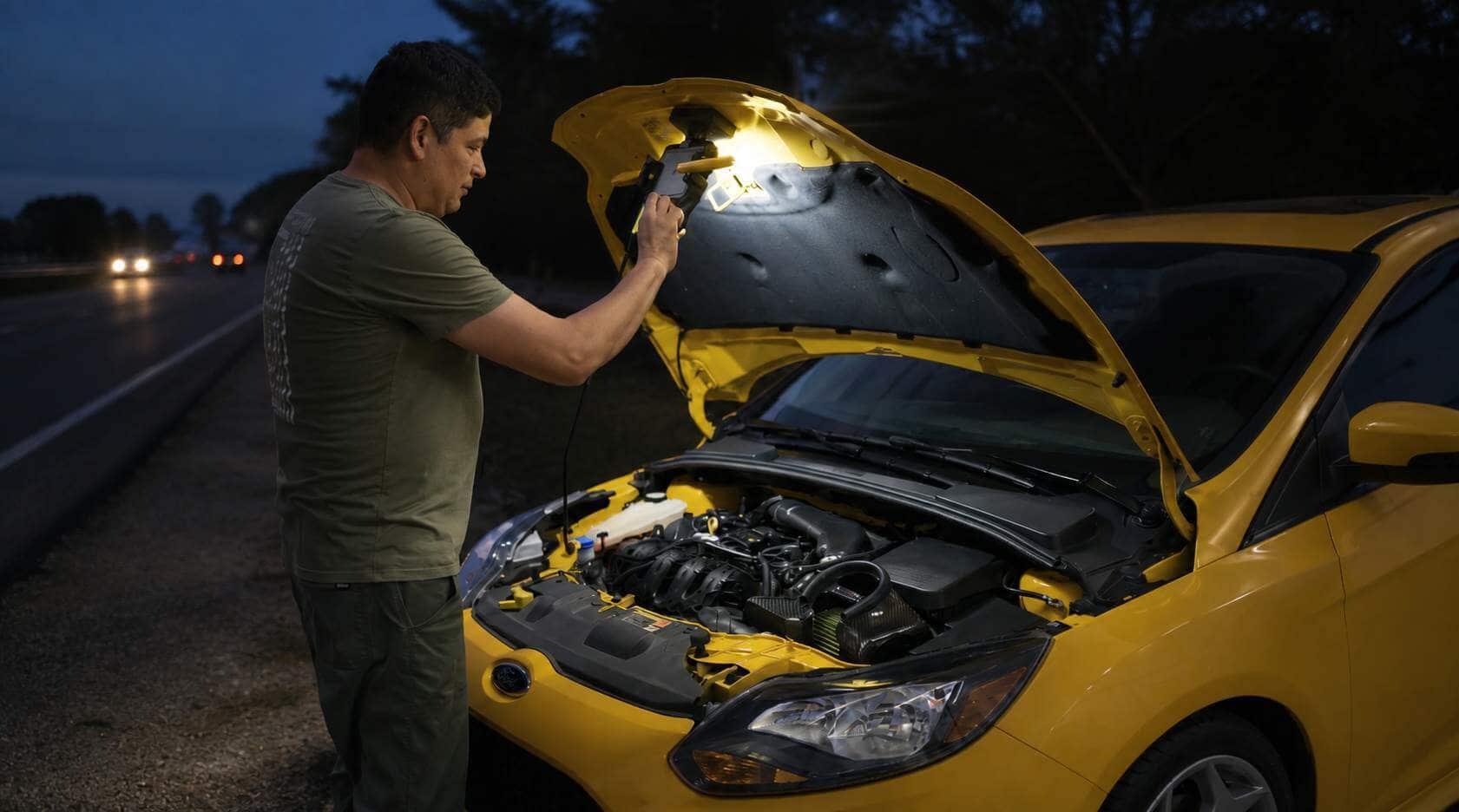
A flat tire, dead battery, or unexpected breakdown is difficult enough during the day. At night, poor visibility can make a roadside problem harder to inspect, repair, and manage safely. That is why dependable car repair lights is a useful part of a well-prepared car emergency kit.
This guide focuses on lights used to inspect and repair a vehicle at the roadside. These are different from road flares, warning beacons, or other visibility devices whose main purpose is to alert approaching traffic.
Quick answer: For most drivers, a practical roadside repair lighting setup starts with one compact flashlight for quick checks and either a work light or headlamp for hands-free tasks. Drivers who frequently work on their own vehicles may also benefit from a dedicated underhood light.
Roadside Car Repair Lights at a Glance
Rather than ranking one light above every other option, this guide matches four HOKOLITE lights to common roadside repair tasks based on their beam pattern, mounting options, and intended use.
Roadside repair task | Recommended light type | HOKOLITE model | Why it fits the job |
Quick checks | Compact flashlight | LEXALL E6 | Portable spot and flood lighting with a magnetic base |
Tire changes and repairs | Work light | YZONI W5 | Wide-area lighting, adjustable panels, and magnetic mounting |
Battery and engine-bay work | Underhood work light | CLAKAP U2 | Long COB light bar spreads light across the engine bay |
Hands-free tasks | Rechargeable headlamp | 6829 Headlamp | Wide beam plus spotlight that moves with your line of sight |
Why One Flashlight May Not Cover Every Roadside
Repair
A compact flashlight is still one of the most useful lights to keep in your car. It can help you inspect a tire, look under the vehicle, find tools in the trunk, check the roadside shoulder, or see where you are walking.
The limitation appears when the job requires both hands. Holding a flashlight while loosening lug nuts, connecting jumper cables, or checking components under the hood can become awkward. A work light, headlamp, or underhood light can illuminate the task while leaving your hands free.
You do not need to fill your trunk with lighting equipment. The goal is to cover the roadside repair situations you are most likely to encounter with a small, reliable setup that is easy to reach.
1. Compact Car Emergency Flashlight for Quick Checks
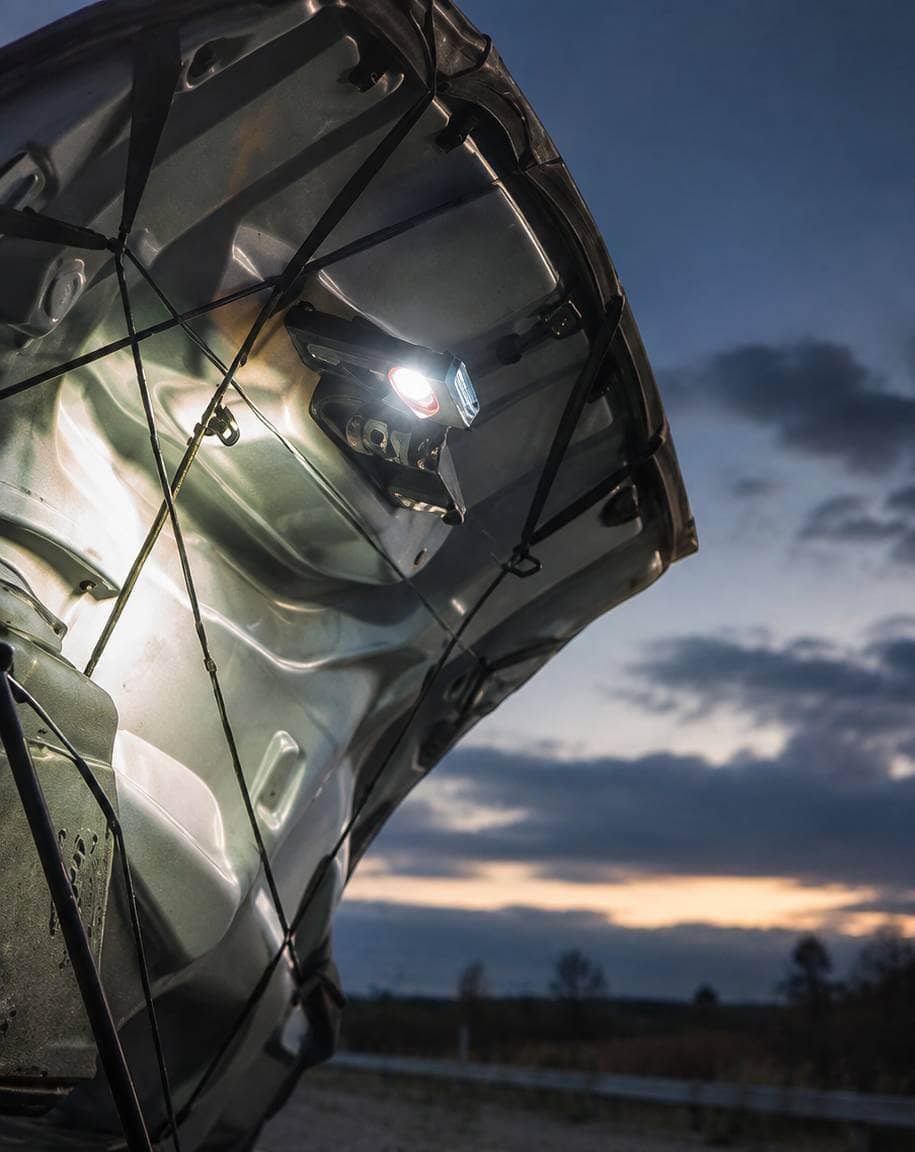
Among car repair lights, a compact flashlight is a practical starting point for a roadside repair kit. It is useful when you need a directional beam for a quick vehicle inspection without setting up a larger light.
The HOKOLITE LEXALL E6 EDC Flashlight is about 4.5 inches long and delivers up to 2,000 lumens. It combines a spotlight, floodlight, RGB side light, and magnetic base in a compact design that is easy to keep in a glove box, center console, or emergency bag.
Why it fits this job
The E6 gives you a focused light for inspections, a wider flood option for nearby tasks, and a magnetic base when you want to position the light instead of holding it. Its compact size also makes it easier to keep within reach instead of buried under other gear in the trunk.
2. Roadside Work Light for Tire Changes and Repairs
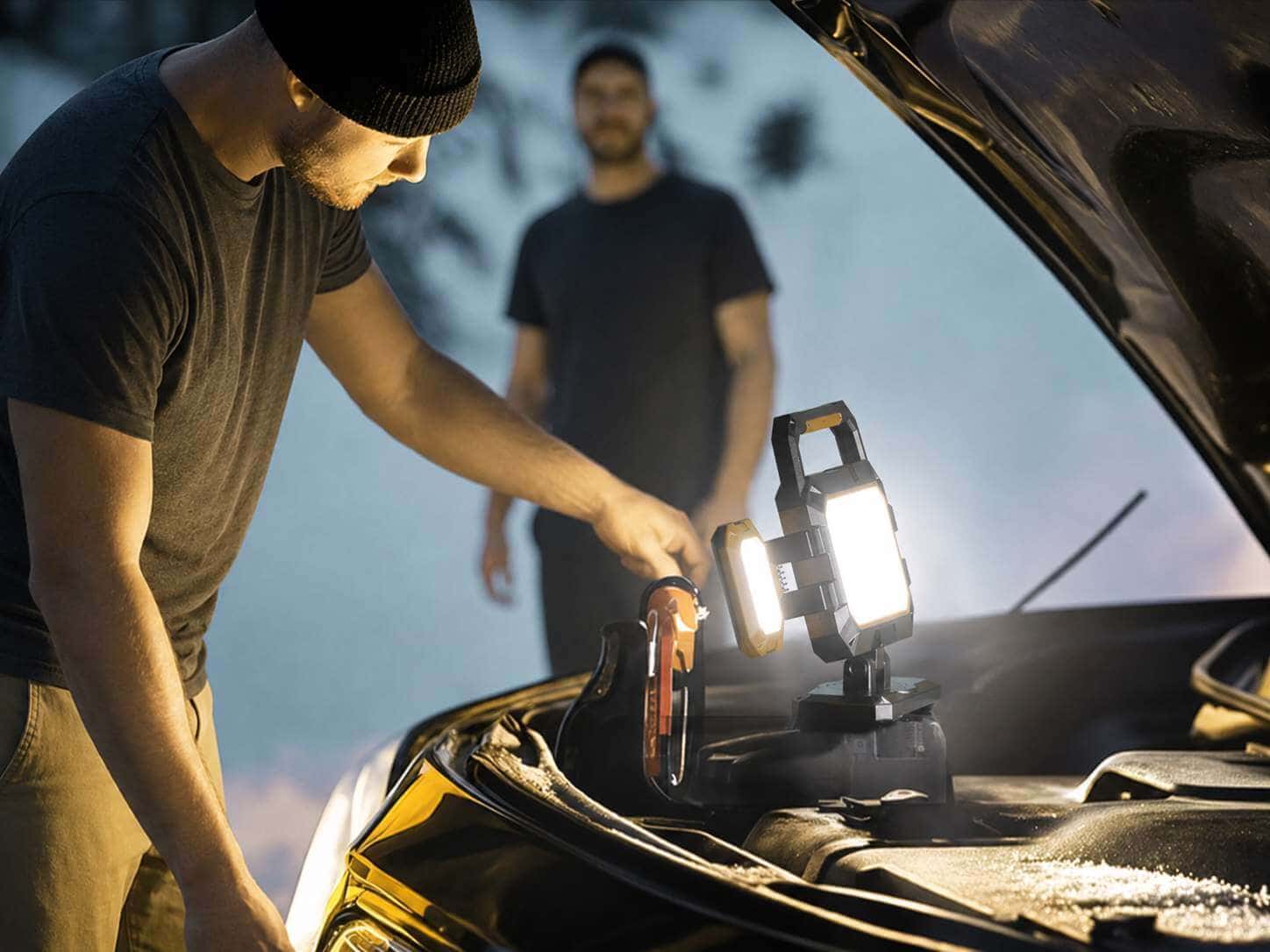
Changing a tire at night requires more than a narrow beam aimed at the wheel. Car repair lights with a wide flood beam can help illuminate the lug nuts, jack point, tools, ground, and surrounding work area at the same time.
The HOKOLITE YZONI W5 Work Light delivers up to 4,000 lumens and features a magnetic base, center spotlight, and adjustable floodlight panels. That combination makes it easier to position the light near the repair area and direct illumination where you need it.
The W5 also includes a built-in 6,000mAh battery that can charge a phone in an emergency, plus a strobe mode for added visual signaling.
Why it fits this job
A roadside work light is most useful when you need broad illumination and both hands free. The W5 can cover a larger repair area than a narrow handheld beam, while its magnetic base and adjustable panels help you aim the light without constantly repositioning it.
Safety note: Treat the strobe as an extra visibility feature, not as a replacement for your vehicle hazard lights, warning triangles, or other proper roadside safety equipment.
3. Underhood Work Light for Battery and Engine-Bay Checks
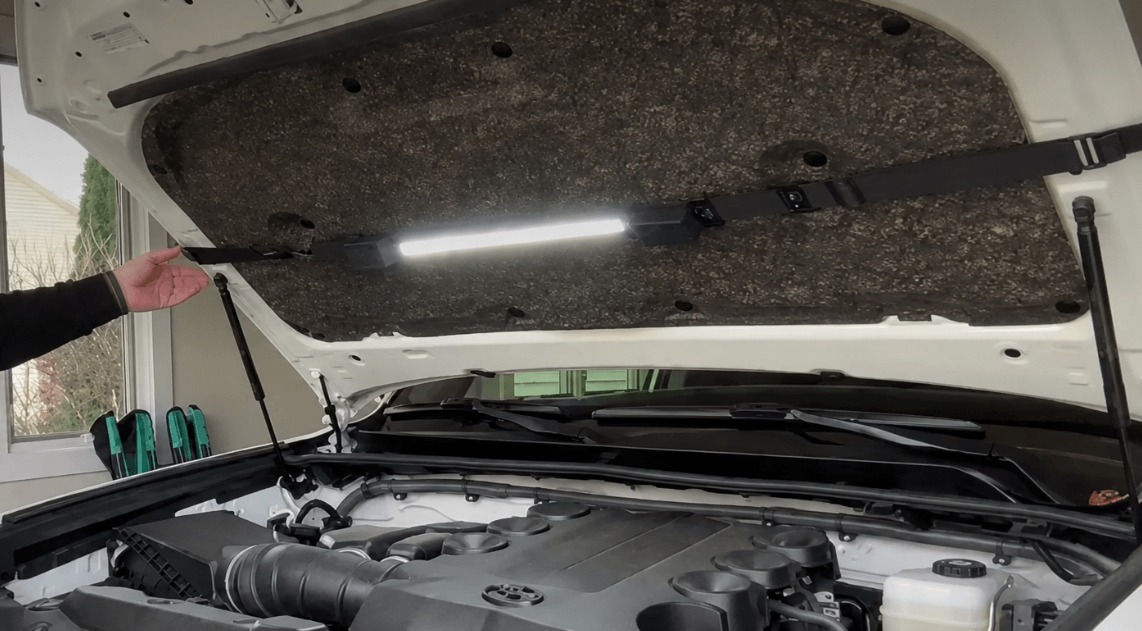
Engine bays contain tight spaces, deep shadows, and components that are difficult to illuminate with a single handheld beam. If you regularly check batteries, connect jumper cables, or work under the hood, a dedicated underhood light can make the area much easier to see.
The HOKOLITE CLAKAP U2 Underhood Work Light provides up to 2,600 lumens from a long COB light bar. Its adjustable frame can mount across different hood sizes, while the light itself can also be removed and attached magnetically for closer work.
The U2 folds down for storage, which makes it easier to keep with jumper cables, tools, and the rest of your roadside equipment.
Why it fits this job
Instead of lighting only one small point, the long COB bar spreads illumination across more of the engine bay. That is useful when you need to see the battery, cable connections, and nearby components at the same time.
4. Rechargeable Headlamp for Hands-Free Roadside Repairs
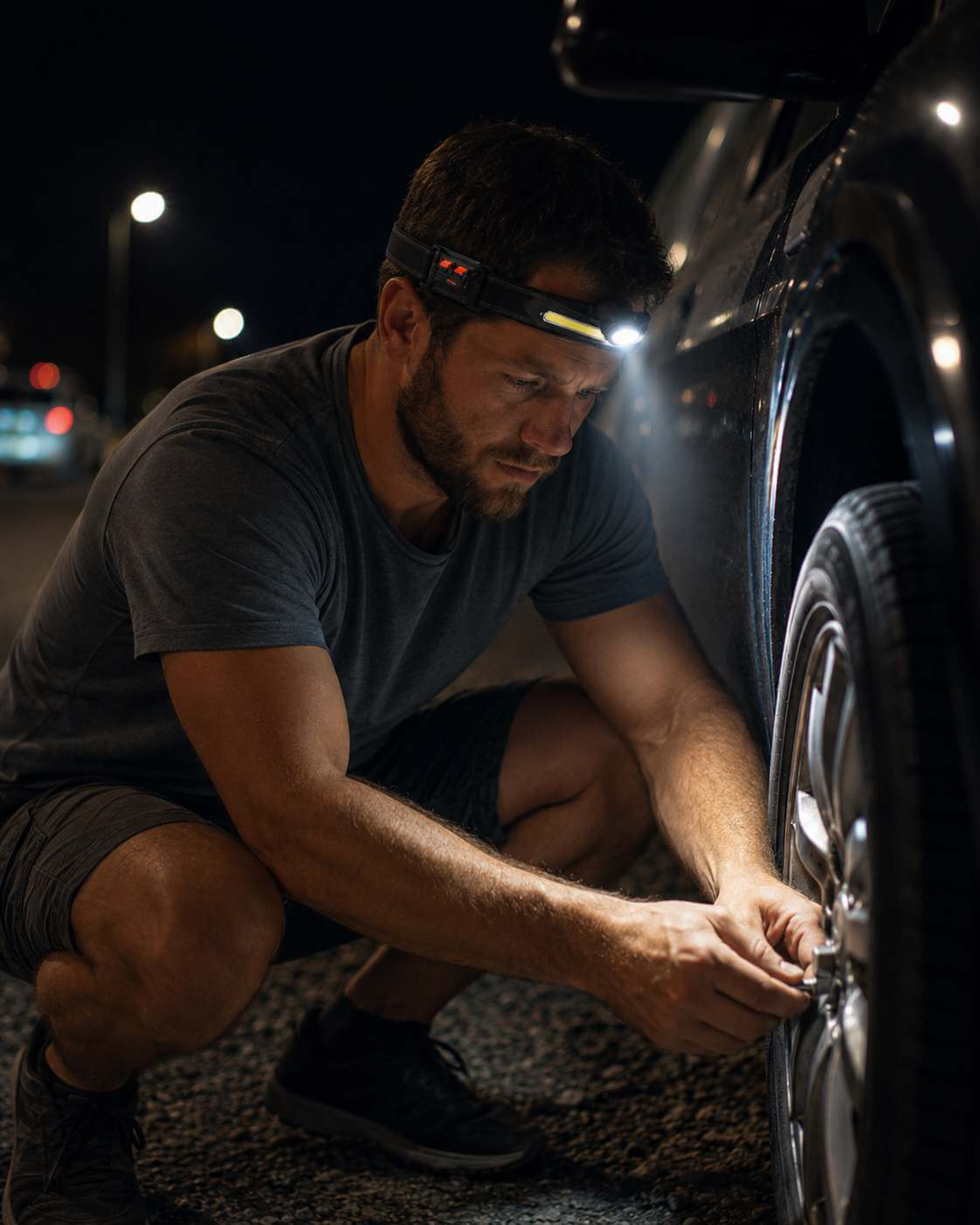
A headlamp is useful when you want the light to move with you. It can be especially convenient while changing a tire, connecting cables, searching through an emergency kit, or checking a hard-to-reach part of the vehicle.
The HOKOLITE 6829 Rechargeable Headlamp combines a 230-degree wide beam with an adjustable spotlight and delivers up to 1,300 lumens. It also includes motion-sensor control, allowing you to turn the light on or off with a wave of your hand when your hands are dirty or already holding tools.
Why it fits this job
The main advantage is not simply brightness. The light follows your line of sight, so you can move between the wheel, tools, cables, and vehicle components without stopping to pick up and reposition a separate light.
How to Choose a Light for Roadside Car Repairs
When choosing car repair lights, the brightest option is not automatically the right one. In real roadside use, the following features can matter as much as maximum output.
- Beam type: A spotlight is useful for checking something at a distance or inspecting a specific area. A floodlight is better when you need to illuminate a wheel, tools, engine bay, or broader work area. A light that offers both can cover more situations.
- Hands-free mounting: Magnetic bases, hooks, stands, clips, and headlamp designs can make a major difference when you are working with tools. Consider where you could realistically place or wear the light around your vehicle.
- Runtime and brightness levels: Roadside repair lighting needs to remain useful for the duration of the task. Multiple brightness levels can help you use only as much output as you need and conserve power when maximum brightness is unnecessary.
- Power source: Whether the light uses rechargeable or replaceable batteries, make battery checks part of your emergency-kit routine. A powerful light is not helpful if it is discharged when you need it.
- Portability and storage: A light that is easy to reach is often more useful than a larger model buried under luggage or tools. Think about whether the light will live in the glove box, center console, trunk organizer, or emergency bag.
- Weather and vehicle storage conditions: If a light will stay in the vehicle year-round, follow the manufacturer guidance for storage and operating conditions. Inspect the light and battery periodically, especially before long road trips or seasonal driving changes.
A Simple Roadside Car Repair Lighting Setup
Most drivers do not need four dedicated car repair lights. A practical setup can be built in layers depending on how often you drive at night and how much vehicle maintenance you handle yourself.
Driver profile | Suggested setup | What it covers |
Most drivers | Compact flashlight + work light or headlamp | Quick checks plus hands-free tire changes and basic roadside repairs |
Frequent night drivers | Compact flashlight + work light + headlamp | Adds a wearable light that follows your line of sight during roadside tasks |
DIY vehicle owners | Compact flashlight + work light/headlamp + underhood light | Adds broader engine-bay illumination for battery checks and underhood work |
Other Emergency Gear Worth Keeping in Your Car
Lighting is only one part of roadside preparedness. A basic emergency kit may also include:
- Reflective warning triangles or a safety vest
- First-aid supplies
- Jumper cables or a portable jump starter
- A tire inflator and basic tire tools
- Work gloves
- A phone charger or power bank
- Drinking water
- An emergency blanket
Final Thoughts
The right car repair lights are the ones that match the roadside jobs you may actually need to do. A compact flashlight is useful for quick inspections, a roadside work light gives you broader coverage for repairs, a headlamp keeps your hands free, and an underhood work light makes engine-bay tasks easier to see.
Instead of choosing a light only because it has the highest lumen number, think about beam type, mounting, portability, power, and where you will store it in the vehicle. A small repair-lighting setup that is charged, easy to reach, and suited to your most likely roadside situations will be far more useful when you actually need it.